


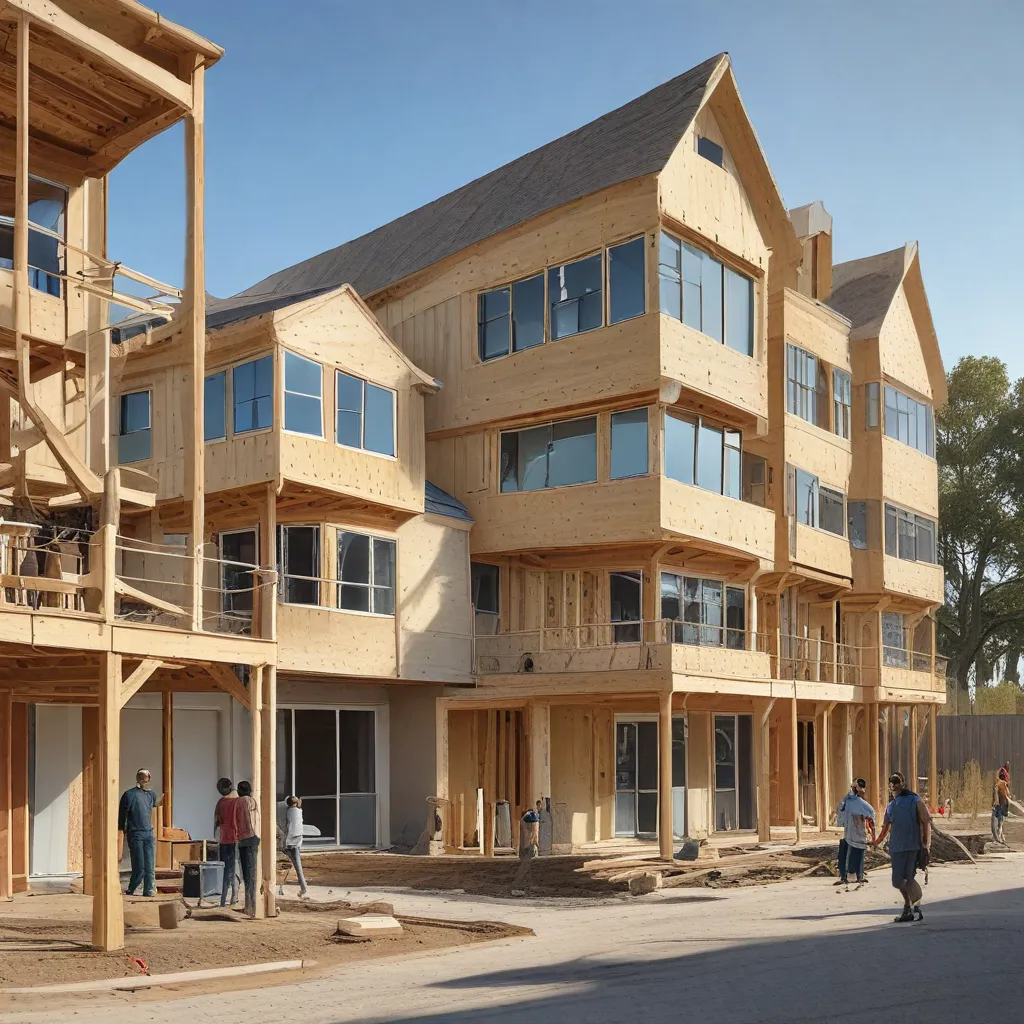
Building for the Future, Not the Past
As I sit down to write this article, I can’t help but feel a sense of excitement and urgency. The world we live in is changing rapidly, and the way we construct our homes and communities needs to change along with it. Gone are the days when we could simply build without considering the long-term impact on the environment. Today, we’re facing the very real challenge of climate change, and it’s time for us to get serious about finding solutions.
That’s why I’m thrilled to be writing for this affordable housing solutions organization. You folks are on the cutting edge of sustainable, climate-conscious construction, and I can’t wait to share some of the incredible innovations I’ve discovered. From cutting-edge materials to revolutionary building techniques, the future of affordable housing is looking brighter and greener than ever before.
Passive House: The Gold Standard of Energy Efficiency
Let’s start with one of the most exciting developments in the world of affordable housing: Passive House design. If you’re not familiar with it, Passive House is a rigorous, performance-based standard that focuses on creating ultra-energy-efficient buildings that require little to no active heating or cooling.
According to Passive House Accelerator, as buildings become more energy-efficient, the contribution of a building’s embodied carbon (the emissions associated with the materials and construction process) to its overall emissions grows. That’s why Passive House projects are now putting a greater emphasis on embodied carbon, choosing materials that sequester carbon and minimizing waste through prefabrication.
And the results speak for themselves. Take, for example, the two new Passive House schools being built in Brooklyn. These buildings are not only designed to be incredibly energy-efficient, but they’re also incorporating innovative materials and construction techniques to reduce their carbon footprint. It’s a true win-win for the environment and the community.
Prefab Revolution: Efficient, Sustainable, and Scalable
But Passive House design is just the tip of the iceberg when it comes to climate-conscious construction. Another exciting development is the rise of prefabricated, or “modular,” housing. By building components of a home in a controlled, factory setting, these projects can dramatically reduce construction waste, minimize environmental impact, and even speed up the build process.
According to the Offsite Construction Summit in Berkeley, California, modular multi-family housing has made great strides in the last few years, but there’s still room for improvement. Speakers at the event discussed the importance of standardized dwelling units, reducing production time, and optimizing public-private partnerships to increase the availability of affordable, modular housing.
And it’s not just in California where this prefab revolution is taking hold. The California Strategic Growth Council is leading the charge, working to expand and create offsite construction factories across the state. Their goal? To meet a lofty target of 25 million housing units in California, all while prioritizing energy efficiency and sustainability.
Rethinking Materials: Sequestering Carbon, Minimizing Waste
But it’s not just the construction process that’s getting a makeover – the materials we use are also undergoing a dramatic transformation. According to Passive House Accelerator, a new option in low-embodied-carbon North American-produced insulation is hitting the market: wood-fiber insulation from GO Lab. This innovative material not only helps to reduce a building’s carbon footprint, but it also supports the local economy and timber industry.
And that’s not all. Affordable housing developers are also exploring the use of cross-laminated timber (CLT), a sustainable alternative to traditional concrete and steel construction. As the team at the California Strategic Growth Council explained, these materials can actually sequester carbon, effectively “locking it in” and reducing the overall environmental impact of a building.
It’s a fascinating shift, and one that’s been a long time coming. For too long, the construction industry has relied on materials and methods that are simply not sustainable in the long run. But with innovative thinkers and forward-looking organizations like this one, we’re finally starting to see a real change.
Bridging the Gap: Affordability and Sustainability
Of course, as exciting as all of these developments are, we can’t forget the ultimate goal of affordable housing: providing safe, comfortable, and accessible homes for those who need them most. And that’s where the true genius of climate-conscious construction really shines.
Take, for example, the Bridging the Gaps project in Pittsburgh, Pennsylvania. This development, which offers both market-rate and affordable housing units, is a perfect embodiment of the intersection between sustainability and affordability. By incorporating Passive House design, renewable energy, and sustainable materials, the project is able to provide high-quality, energy-efficient homes to a diverse range of residents – proving that you don’t have to sacrifice one for the other.
And that’s the real beauty of what’s happening in the world of affordable housing. Organizations like HACC Housing are leading the charge, demonstrating that it’s possible to build homes that are not only affordable but also environmentally responsible. It’s a bold vision, to be sure, but one that’s absolutely essential if we’re going to create a more sustainable, equitable future for all.
A Bright Future Ahead
As I wrap up this article, I can’t help but feel a sense of optimism and excitement. The innovations happening in the world of climate-conscious, affordable housing are truly remarkable, and I can’t wait to see what the future holds.
From Passive House design to prefabricated construction, and from sustainable materials to integrated community development, the affordable housing solutions of tomorrow are shaping up to be both eco-friendly and accessible. It’s a win-win for both the planet and the people who need it most.
So, if you’re looking for a glimmer of hope in these challenging times, look no further than the amazing work being done by organizations like HACC Housing. The future of affordable housing is bright, green, and full of possibility. Let’s embrace it together.