


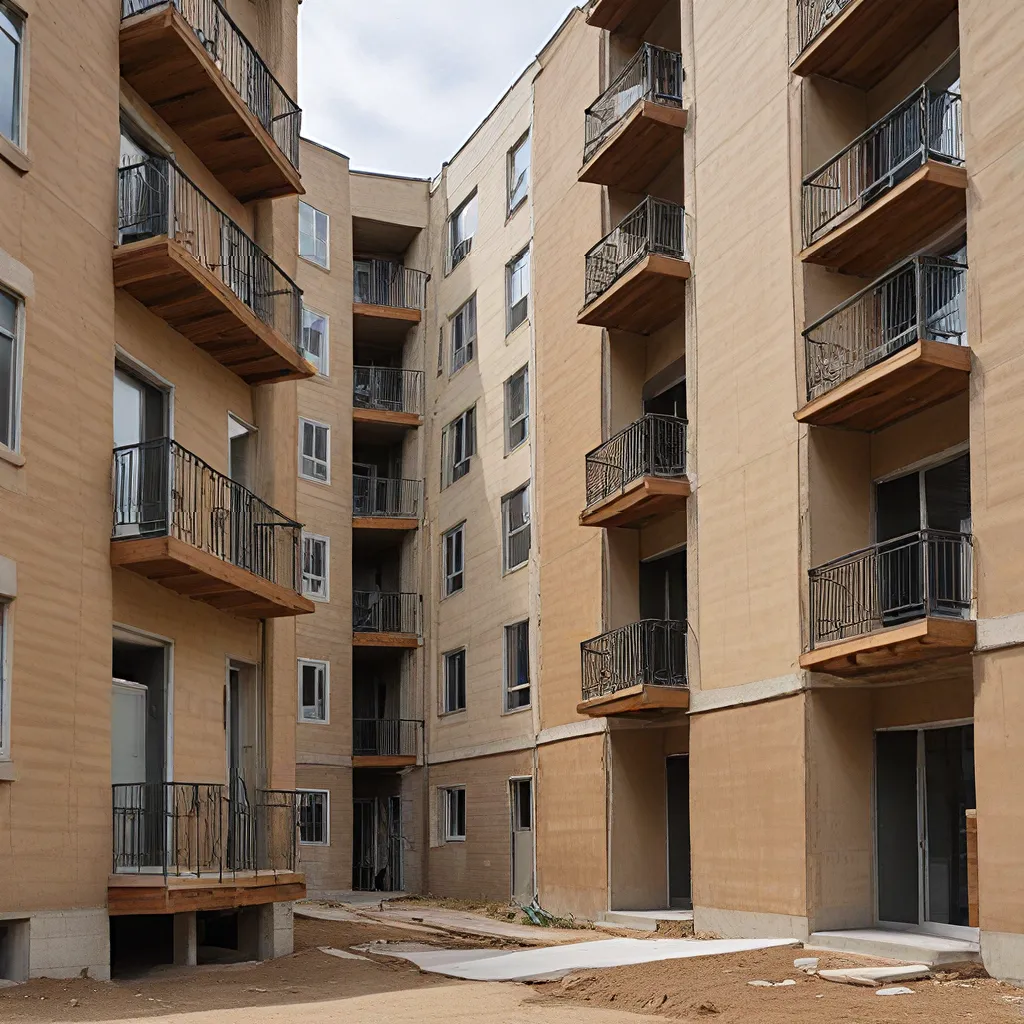
Partnerships – The Key to Solving the Housing Crisis
I firmly believe that successfully addressing the crisis of housing unaffordability and instability will depend on partnerships. That means partnerships between organizations that share similar goals and values but often do their work siloed from or at cross purposes to potential allies. But it also means partnerships between policy efforts themselves – binding together reforms that expand and improve our housing choices, protect tenants from displacement and rising rents, and fund housing justice and equity priorities like right to counsel, rent subsidies, and affordable housing production and acquisition.
Not just one or another of these priorities, but all of them. This is basically the argument I make in my book, The Affordable City. Here in Los Angeles, my hope was to see this approach embraced during the housing element process – a once-every-eight-years update to the city’s framework for meeting its housing goals.
In an early move that seemed promising for linking the different goals of housing policy reform, the city’s task force was divided into four subcommittees under the general headers of 1) production and innovation, 2) housing stability, 3) livability and sustainability, and 4) homelessness. That update process is nearing its conclusion, and I have to say – it doesn’t feel like these priorities are coming together.
To be frank, it doesn’t feel like we’re adequately prioritizing any of these four overarching goals, to say nothing of boldly advancing all of them. The update process is still underway, and I haven’t given up on it, but I’m impatient, and I worry that the closer we get to the conclusion without a clear vision, the less likely we are to generate something worthy of our city’s needs and its immense potential. It feels like we’re checking the boxes when we could be doing so much more.
A Conversation Starter
So with that in mind, I’m outlining my own draft vision here. It represents no one’s views but my own, and it’s completely open to revision. It’s a conversation starter, or so I hope. I’ve framed this as a ballot initiative, and I did so for a few different reasons.
One is simply that it might draw more attention in this format – the housing element process certainly hasn’t succeeded on that front. Further, it’s helpful to think about what it would take to garner support from a majority of LA residents, or even more challenging, a majority of its voters. That it be a ballot initiative isn’t strictly necessary, but a ballot initiative would ensure that the reforms were approved as a package – all or nothing. The local legislative process, in contrast, would likely entail the whittling away of individual components, limiting its impact and slowing its implementation.
The housing element is also a useful tool for forcing action. The simple fact is that LA, and cities across the state, must plan for a lot more housing than it did in the past. It’s a matter of state law, and the state will not be accommodating laggards as it once did. LA must plan for more than 450,000 units from 2021 to 2029 – over 56,000 units per year. More so than in the past, the question will not be if we should plan for growth, but how. The question posed by a ballot initiative is therefore not whether voters prefer its contents to all other alternatives, but whether they prefer it to some unknown and possibly worse alternative.
Overarching Goals
With that introduction out of the way, here are the overarching goals of the proposal:
-
Strengthen tenant autonomy and tenant protections, especially protections related to unlawful eviction and other forms of involuntary displacement most likely to result in homelessness, and fully compensate tenants for displacement with right-to-return requirements in the rare cases when it does occur.
-
Prioritize the construction of new sustainable, mixed-income housing in neighborhoods that are high-resource and provide quality transit – not just one or the other, which leads to a disproportionate amount of housing proposed and built in lower-income communities where transit service is often good.
-
To the extent that changes generate windfall profits for current property owners, seek to capture a reasonable share of value for public benefit, primarily through the provision of on-site income-restricted housing.
-
Generate new funding resources and direct them toward under-resourced communities and households, including through a right to counsel for tenants facing eviction.
-
Allow less well-resourced communities to opt-in to zoning changes similar to those implemented in wealthier neighborhoods, bringing in additional investment if they choose and under conditions agreed upon by the communities in which the changes would occur.
Now, let’s dive into each policy in more detail.
Rent Stabilization Reforms
Since 1985, the city’s rent stabilization ordinance has allowed landlords to raise rents on rent-stabilized tenants between 3% and 8% annually, depending on the inflation rate. If the inflation rate is 4%, the maximum allowable rent increase is 4%. If inflation is 6%, the maximum increase is 6%. But if inflation is under 3%, as it has been almost every year since 2009, landlords can still raise rents by 3% because that’s the floor.
This is unfair to tenants, and unlike other proposed reforms, including vacancy control and applying rent stabilization to buildings built after 1979, the city can revise this rule without waiting for changes to state law. The maximum allowable rent increase should be equal to inflation each year, down to one-tenth of a percent. If the inflation rate is 2.3%, then that’s the maximum rent increase for rent-stabilized units that year. If inflation is negative, the maximum increase is 0%.
Landlords shouldn’t be required to reduce their rents that year – that would be a very awkward policy – but the negative value for that year is deducted from the maximum allowable increase when positive inflation returns. If inflation was -0.5% one year and 1.2% the next, rents could be increased a maximum of 0.7% in year two. City council would be permitted to revise the maximum allowable increase at a later date to less than 100% of the inflation rate if they chose, but not greater than 100%.
Upzoning in High-Income, Transit-Rich Neighborhoods
Allowable rent increases in Los Angeles have exceeded the inflation rate for most years of the past two decades. We need more housing, and while more homes are really a good thing just about anywhere, they do more good and are less likely to do harm in rich neighborhoods. These are also the neighborhoods where housing is most desperately needed – high prices are strong evidence of that – and they tend to be most restrictive toward housing development.
They use their wealth and political power, as they have for a century or more, to close their borders and direct growth toward less affluent, less white, less opportunity-rich communities. Any time more housing is proposed in privileged neighborhoods, there is a political uproar, and even if the opponents represent only a small share of the overall population, their concerns are usually heeded, and proposed changes are scaled back. More often, the proposals aren’t made at all because planners and elected officials know what the reaction will be.
The result? Fewer housing choices overall, with higher prices everywhere, and more of the housing that does get built is built in communities more vulnerable to gentrification and displacement. And more housing ends up being built in the climate-destroying suburbs of Phoenix, Las Vegas, Houston, and similar sprawling, car-oriented, high-emission cities.
Here’s how the rezoning would work: Pick a central point within each of these communities, possibly centered on a rail station or an intersection of frequent bus lines, and within 1/4-mile of that point, housing can be built up to eight stories tall with zero parking. Within 1/2-mile, buildings up to five stories are allowed, and no more than 0.5 parking spaces per unit can be required. All parking in both zones must be at-grade or underground – no ugly parking podiums. Developers are allowed to provide more parking if they choose, and most probably would, but the city can’t require it. Building parking spaces can cost upward of $50,000 per space and dramatically increases the cost of housing.
No density limits are imposed in these zones, and floor area caps, setbacks, and other restrictions are all very permissive. Projects must be approved within 30 or 60 days after submitting plans that comply with zoning and building code requirements. These zone changes would, of course, not apply to parcels with parks or other public-serving uses; they would continue to be reserved for those uses.
As with the city’s Transit-Oriented Communities program, projects built in these zones must provide income-restricted units on-site. These would be higher than what TOC requires and quite a bit higher in some cases. For sites that previously allowed multifamily housing, the requirements would be as follows: 5% extremely low-income households (earning under 30% of area median income, or AMI) and 8% very low-income (50% AMI) or 11% low-income (80% AMI). For sites that did not previously allow residential uses or only permitted single-family residential, the affordability requirements would be higher – 7% extremely low-income and 10% very low-income or 13% low-income. This is because the additional value conveyed upon these properties from a rezoning is greater than for those that already permitted multifamily uses.
Protecting Tenants from Displacement
With the broad upzonings proposed above, there would be no shortage of alternative sites where housing could be built without displacement. Research shows that when tenants face eviction without legal representation, they almost always lose their cases and their homes. When they have a lawyer and go to court, they almost always win and are able to stay. The vast majority of households don’t receive legal support, however, in large part due to lack of funds – unlike criminal cases, tenants facing eviction are not entitled to a public defender.
Tenant right-to-counsel (RTC) programs seek to remedy this by funding legal representation. Potential benefits to RTC include fewer evictions, including frivolous/informal evictions, with tenants now on a more level playing field; reduced homelessness; and fewer public expenses in other domains like shelters, healthcare, and criminal justice. In places that have adopted such programs, such as New York, the results have been promising – evictions declined more than five times more in New York ZIP codes with right to counsel than in those without.
Los Angeles has toyed with the idea of adopting a local RTC program but has not yet followed through, at least in part due to cost concerns. One analysis estimated the cost of RTC in Los Angeles to be approximately $82 million per year, though this includes costs for both the city and county. LA could cover a substantial share of that expense with a small fee on new developments in the high-income upzoned areas discussed above.
If just 10,000 units were built in these zones each year at an average of 800 square feet and a fee of $5 per square foot, this would generate $40 million in fees annually. If 20,000 units were built – and as a reminder, the city is required by state law to target 56,000 additional units per year through the 2020s – this would cover the full estimated cost of the program. Any funds generated in excess of the right-to-counsel program’s needs could be diverted to affordable housing development or acquisition.
Preserving Affordability in Perpetuity
When the federal government created the Low-Income Housing Tax Credit (LIHTC) to fund affordable housing construction, building owners were required to keep the units affordable for only 15 years. This was subsequently changed to 30 years, and in California, it’s now 55 years for most income-restricted housing. When the covenants expire at the end of these terms, the units may revert back to market-rate.
Even in the best cases, the local government usually needs to pay property owners a significant sum of money to extend the affordability terms. While there’s no way to change the rules for existing income-restricted units, we can change the rules to avoid this problem in the future – or at least delay it. Specifically, we can increase the required affordability term in Los Angeles from 55 years to 99 years or make it permanent if possible.
Rules vary from state to state about contracts with terms greater than 99 years, but for now, this requirement should only be imposed on developers who provide affordable units without public subsidies, such as mixed-income, for-profit developers who use the TOC program today and developers who would use the new zoning rules in the wealthy neighborhoods under this proposal.
Empowering Neighborhoods to Shape Their Future
We often treat zoning reform and upzoning specifically as a burden that neighborhoods and their residents must bear. This initiative proposes mandatory rezoning in some wealthier communities because these are the places where new housing is in the shortest supply and can provide the best access to good jobs, schools, and other amenities. We also know that these are not the places that will voluntarily open themselves up to more neighbors; it will need to be imposed, and it should be imposed.
That said, development is also an opportunity for investment and positive change, and done right, it may appeal to some neighborhoods for which it is not mandated. They should be provided some mechanism to participate if that’s their desire. One possibility: Require the city or county (I admit my ignorance of election administration) to hold an election for inclusion in the upzoned neighborhoods program for any neighborhood that secures verified signatures from at least 10% of its population.
The petitioners could draw the boundaries however they liked, within some prescribed limits, such as being centered on the intersection of two transit lines (buses are fine), stretching no more than 1/2-mile from that center point in any direction, and being geographically contiguous. They could also choose how to apply the larger and smaller upzones (eight or five stories), and somewhat lower affordability requirements, in-lieu fees, and RTC fees would be permitted due to the weaker markets outside the original upzone areas.
The rezoning would be voted on at the next general November election in an even year (presidential and midterm elections, in other words), and would require 60% support to pass. This would give less resourced communities a real say in shaping their futures while still harnessing the power of the wealthier neighborhoods to drive citywide progress.
Funding Affordable Housing and Tenant Protections
I want to acknowledge that this proposal leaves out a significant funding source for affordable housing production, acquisition, and rent assistance, as well as shelter, supportive housing, and homeless services. Given the limitations of Prop 13 and other political and economic considerations, I think the best local funding strategy is a progressive transfer tax paid on the sale of property, which I wrote about for the UCLA Lewis Center here and elaborated further at my own blog here.
This could raise around $1 billion per year in the city of LA and double that for the county as a whole. Transfer taxes have been popular elsewhere in California in recent elections, so I believe something like this could pass. But it would probably be too much to ask voters to take a position on a bunch of policy and zoning changes and a large tax increase on the same initiative. Nonetheless, I wanted to make sure it got a mention here.
Conclusion
That’s it! As you can see, it’s a work in progress, and it’s kind of a lot. But if you’re thinking about how to pitch this to voters, it’s actually pretty straightforward: Strengthen tenant protections across the city and get more out of the money we spend on affordable housing; build more housing in wealthy neighborhoods and give every other neighborhood more say over their future.
If nothing else, I hope this illustrates how much better things could be – how a city of abundance, fairness, and equity is entirely within our grasp. I don’t mean to imply that this proposal would solve all of our problems, or for this to take the place of any work being done by others. This is intended to complement, not supplant or undermine.
When we propose and debate just one idea – upzones, right to counsel, rent control reforms, new revenue sources – that idea often gets attacked as insufficient or even potentially harmful. The thing is, those critiques aren’t wrong. If we just build a lot more housing without regard for the impacts on vulnerable renter households or for where that housing is being built, we run the risk of doing unnecessary harm.
When we propose displacement protections without identifying new sites where housing can be built, we may limit evictions in the short term but speed up gentrification in the medium or long term. When we tackle these and other problems all at once, together, we can gain the benefits of one approach while addressing its shortcomings with another. We can also, I hope, bring together a strong enough coalition of housing justice advocates to win the reforms we deserve.
As always, I welcome any constructive feedback and am happy to work in partnership with all who share a similar vision for the city.