


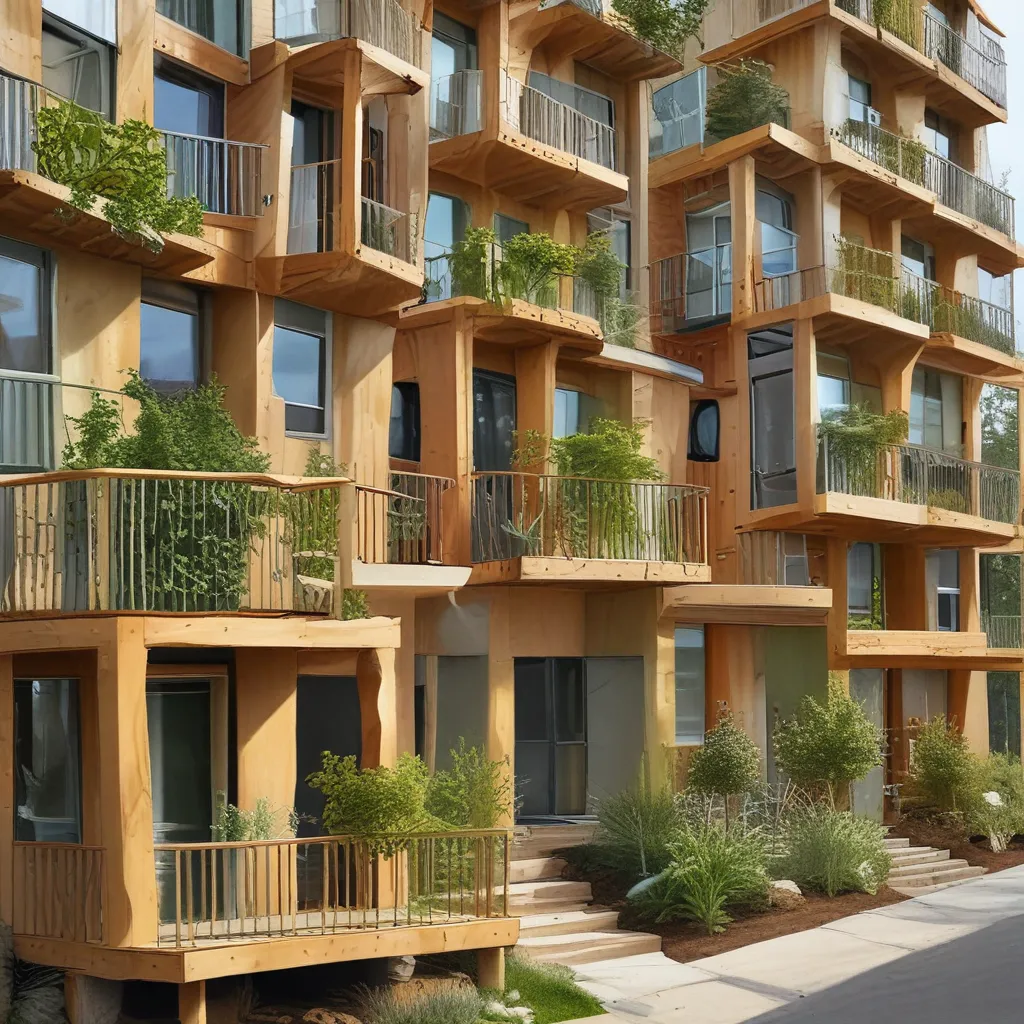
Turning the Crisis into Creation: Green Affordable Homes
I still remember the day I first learned about the green affordable housing movement. It was during a community meeting in my hometown, where a group of passionate residents and local leaders gathered to discuss the growing housing crisis. As I listened intently, I was struck by the realization that the solutions to our affordable housing woes could also serve as a pathway to a more sustainable future.
You see, I come from a family that has faced the financial strain of rising housing costs for years. My parents, both hardworking individuals, have struggled to keep a roof over our heads, often sacrificing other essential needs to make ends meet. The thought of having an affordable, eco-friendly home that could alleviate this burden seemed almost too good to be true.
But as the discussion unfolded, I learned about the pioneering work of organizations like Green America and their efforts to address the intersection of economic, environmental, and health concerns through the development of green affordable housing. The stories they shared of communities like Seattle’s Yesler Terrace, where residents and health workers were empowered to create healthier living environments, ignited a spark of hope within me.
Tackling the Affordable Housing Crisis
It’s no secret that the affordable housing crisis has been steadily worsening across our nation. According to a 2018 Harvard University report, the number of cost-burdened Americans (those spending more than 30% of their income on housing) has doubled since the 1960s. And the impact is felt across the country, from bustling urban centers to smaller communities like ours.
The stark reality is that even families earning 80% of the median income in their area are often priced out of the housing market. And for those earning just 50% of the median, the struggle to find a safe, affordable place to call home can be downright overwhelming.
What’s more, this crisis has disproportionately impacted low-income communities and communities of color, further exacerbating existing inequalities. As neighborhoods undergo rapid gentrification, long-standing residents are often forced to relocate, disrupting the fabric of their communities.
But amidst this daunting landscape, the green affordable housing movement has emerged as a beacon of hope, offering a path forward that simultaneously addresses economic, environmental, and social justice concerns. And it’s a path that I’m eager to explore further.
The Green Affordable Housing Approach
At the heart of the green affordable housing movement is the belief that we can create living spaces that are not only financially accessible but also environmentally sustainable and conducive to the health and well-being of their occupants. This holistic approach is rooted in the principles of the United Nations’ 1992 Earth Summit, which emphasized the interconnectedness of economy, equity, and the environment.
Organizations like Global Green have been at the forefront of this movement, advising housing developers, project managers, and government agencies on how to incorporate eco-friendly features and design elements that can make a real difference in the lives of low-income families.
One such project is the Solara development in Poway, California, which Global Green collaborated on with the nonprofit Community Housing Works. Solara was one of the first affordable housing complexes to not only incorporate energy-efficient technologies like solar panels and low-flow fixtures but also produce a significant portion of its own electricity on-site.
But the benefits of green affordable housing go far beyond just cost savings. As Walker Wells, a leader in sustainable building and neighborhood development, explained, “It’s about the degree of care put into the project. The residents feel like they’re valued, like we spent a lot of time making a high-quality place for them to live because they’re a person of value.”
Healthy Homes, Healthy Lives
One of the most compelling aspects of the green affordable housing movement is its focus on improving the health and well-being of residents. For too long, low-income communities have been disproportionately exposed to environmental hazards within their homes, from poor air quality to the presence of toxic chemicals.
But the green affordable housing approach aims to change that. By incorporating design features like energy-efficient appliances, low-emissivity windows, and constant fresh air ventilation, these homes can dramatically reduce the incidence of health issues like asthma and respiratory problems.
The Breathe Easy Homes project in Seattle is a prime example of this. Developed by the Seattle Housing Authority, King County, and the University of Washington, these affordable homes were specifically designed to improve air quality, leading to a significant decrease in asthma-related visits to the clinic among residents.
And it’s not just about the physical health of the occupants. The emotional and mental well-being of residents is also a key priority. As Wells eloquently stated, “People may not be conscious of all these green features, but what they get is the degree of care put into the project. The residents feel like they’re valued.”
Building a Sustainable Future for All
As I delve deeper into the world of green affordable housing, I can’t help but feel a sense of excitement and hope. These innovative solutions not only address the pressing need for affordable living options but also pave the way for a more sustainable and equitable future.
By investing in energy-efficient technologies, incorporating renewable energy sources, and prioritizing the health and well-being of residents, green affordable housing projects are demonstrating that it’s possible to create homes that are both financially accessible and environmentally responsible.
And the impact of these initiatives extends far beyond the individual households they serve. By reducing energy consumption and carbon emissions, green affordable housing developments can contribute to the larger fight against climate change, benefiting our entire community and the planet as a whole.
Moreover, the emphasis on equity and social justice inherent in the green affordable housing movement resonates deeply with me. By targeting the needs of low-income families and communities of color, these projects are actively working to dismantle the systemic barriers that have long perpetuated housing insecurity and economic inequality.
As I reflect on my own family’s struggles with the rising cost of living, I can’t help but imagine what it would be like to have an affordable, eco-friendly home that not only reduces our monthly expenses but also promotes a healthier, more sustainable lifestyle. It’s a future that I’m eager to be a part of, and one that I believe can be realized through the continued efforts of organizations like HACC Housing and the dedicated individuals who are driving the green affordable housing movement forward.
A Brighter Future on the Horizon
As I look ahead, I can’t help but feel a renewed sense of optimism. The green affordable housing movement has already shown that it’s possible to create living spaces that are both financially accessible and environmentally responsible, and the momentum behind this approach is only growing stronger.
With the recent increase in Low Income Housing Tax Credit (LIHTC) allocations and the continued efforts of organizations like HACC Housing, I’m confident that we’ll see more and more green affordable housing projects take shape in the years to come. And as these developments take root in communities across the country, the positive ripple effects will be felt far and wide.
But the work is far from over. There’s still a significant gap between the demand for affordable housing and the available supply, and the threat of climate change looms large. That’s why it’s crucial that we continue to advocate for bold, innovative solutions that prioritize the needs of low-income families and the health of our planet.
As I look to the future, I can’t help but feel a sense of excitement and purpose. The green affordable housing movement has the power to transform lives, strengthen communities, and pave the way for a more sustainable and equitable world. And I’m honored to be a part of this journey, working alongside dedicated individuals and organizations to make this vision a reality.
So, let’s keep pushing forward, one eco-friendly rental at a time. Together, we can create a brighter, more affordable, and more sustainable future for all.