


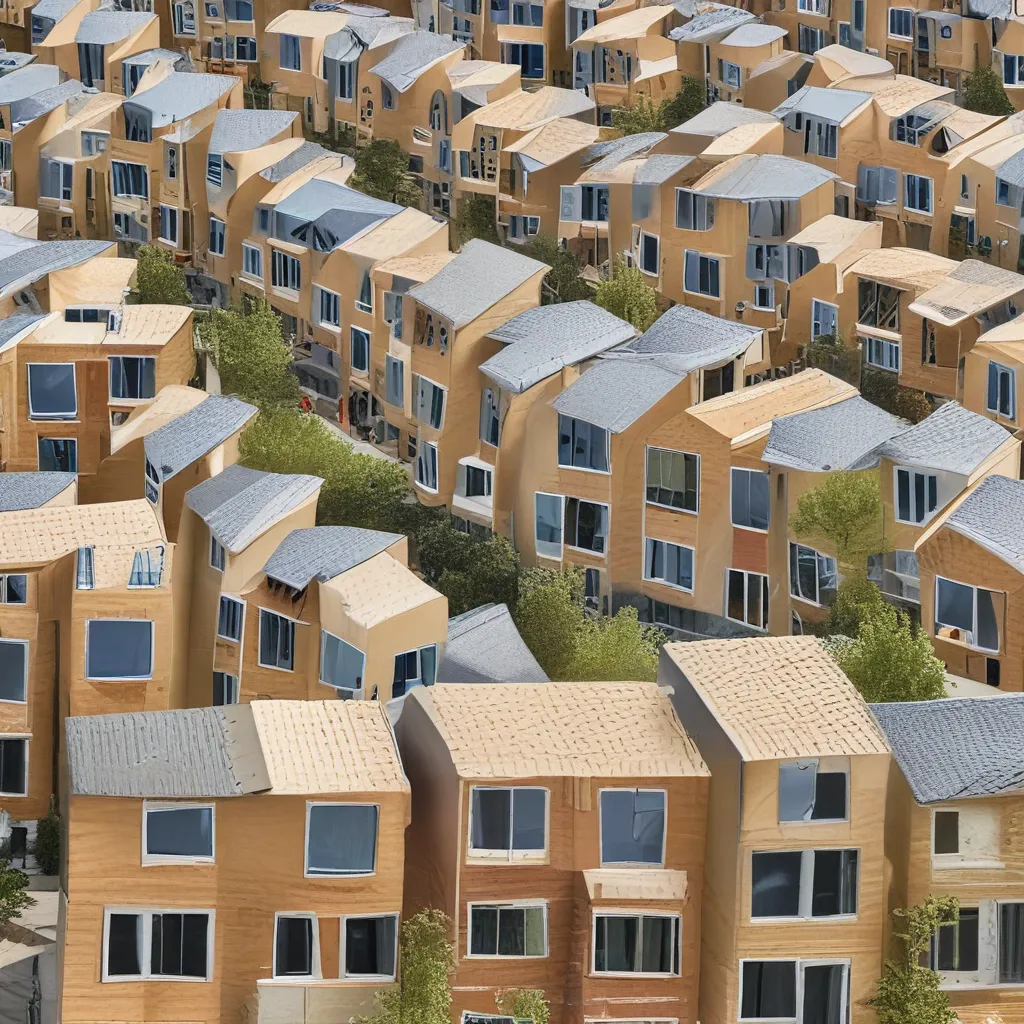
Revolutionizing the Housing Landscape: Innovative Approaches to Affordability
As the cost of living continues to soar, the need for innovative solutions to the affordable housing crisis has never been more pressing. Gone are the days when a simple “build more homes” approach could adequately address this complex issue. Instead, we find ourselves in an era of bold experimentation, where visionary minds are redefining the very concept of affordable housing.
In this article, we’ll venture into the heart of these pioneering efforts, uncovering a tapestry of cutting-edge strategies that are transforming the way we think about accessible and sustainable living. From tech-driven initiatives to community-driven collaborations, prepare to be inspired as we explore the myriad of Affordable Housing Innovations that are reshaping the landscape.
Harnessing the Power of Electric Vehicles: A Symbiotic Approach
One such innovative approach is taking place in the bustling city of Boulder, Colorado. Here, the local government, in partnership with Boulder Housing Partners, Colorado CarShare, Xcel Energy, and Fermata Energy, has launched a groundbreaking program that seamlessly integrates electric vehicles (EVs) and affordable housing.
The initiative features two Colorado CarShare electric vehicles paired with bi-directional charging stations, a technology that enables two-way energy flow between the vehicles and the buildings they’re connected to. This pioneering “Vehicle-to-Everything” (V2X) approach holds immense potential, as it allows the excess energy stored in the EVs to be fed back into the buildings, effectively mitigating peak energy demands and reducing overall energy costs for residents.
“We are excited to build on the success of our bi-directional EV charging pilot at North Boulder Recreation Center,” enthused Matt Lehrman, senior policy advisor for energy systems at the City of Boulder. “This project allows the partners to expand access to electric mobility while exploring new potential business models with bi-directional charging.”
The program doesn’t stop there. It also includes discounted carshare memberships funded by the city and rebates provided by Xcel Energy to Colorado CarShare for the procurement of EVs, as well as funding for the acquisition and installation of the bi-directional chargers. This multifaceted approach aims to make electric mobility more accessible to all community members, including those living in affordable housing.
“This program helps deliver the benefits of electric vehicles to all customers in the communities we serve, including those who don’t drive or drive electric,” said Huma Seth, Director of Clean Transportation at Xcel Energy. “This project is a proof of concept of bi-directional charging to assess technology with the potential to enhance customer bill savings.”
The integration of electric vehicles into the affordable housing landscape is not just about transportation; it’s about revolutionizing energy management and building resilience. As Tony Posawatz, CEO of Fermata Energy, explains, “Electric vehicles are poised to revolutionize their function, evolving beyond mere transportation to bolster grid resilience and sustainability.”
This innovative program in Boulder sets a precedent for municipalities seeking to seamlessly integrate EVs into their energy strategies, ultimately enhancing community resilience and paving the way for a more sustainable future.
Community-Driven Affordable Housing: Empowering Grassroots Solutions
While technology-driven innovations hold immense promise, the heart of affordable housing solutions often lies in the hands of the communities themselves. In cities across the nation, grassroots organizations are spearheading initiatives that put residents at the forefront of the affordable housing movement.
Take, for instance, the work of The American Institute of Architects’ Housing Knowledge Community in Boulder, Colorado. This group of dedicated architects, urban planners, and housing advocates are actively collaborating with local communities to develop innovative, community-driven affordable housing models.
By engaging directly with residents, these professionals are gaining a deeper understanding of the unique challenges and aspirations of each neighborhood. This approach allows them to tailor their solutions to the specific needs of the people they serve, ensuring that the affordable housing projects they create are not only functional but also reflective of the community’s values and identity.
“It’s not just about building units,” explains one of the architects involved in the program. “It’s about creating holistic, sustainable communities that empower residents and foster a sense of belonging. We’re not just building homes; we’re building the foundations for thriving, equitable neighborhoods.”
This community-centric approach has led to the implementation of diverse housing models, from co-op living arrangements to intergenerational housing complexes. By prioritizing the voice and agency of the residents, these grassroots initiatives are redefining the very concept of affordable housing, transforming it into a collaborative, empowering experience.
Adaptive Reuse: Breathing New Life into Existing Structures
As the demand for affordable housing continues to grow, innovative thinkers are looking beyond the traditional construction of new buildings and exploring the untapped potential of existing structures. This approach, known as “adaptive reuse,” involves the repurposing of underutilized or abandoned buildings, transforming them into vibrant, affordable living spaces.
One such example can be found in the nation’s capital, where the National Building Museum is currently hosting an exhibition that showcases the transformative power of adaptive reuse.
“Affordable housing is one of the most pressing challenges facing communities across the country,” says the museum’s director. “Through this exhibition, we aim to highlight innovative solutions that are not only cost-effective but also environmentally sustainable and community-driven.”
One of the featured projects is the conversion of a former school building into a mixed-use affordable housing complex. By repurposing the existing structure, the developers were able to significantly reduce construction costs while preserving the building’s historic character and integrating it seamlessly into the surrounding neighborhood.
But the benefits of adaptive reuse go beyond just financial savings. These projects also have the potential to breathe new life into underutilized urban areas, creating vibrant hubs of activity and fostering a greater sense of community.
“It’s not just about providing affordable housing,” one of the project managers explains. “It’s about revitalizing neighborhoods, creating jobs, and empowering local residents to be active participants in the transformation of their communities.”
As cities continue to grapple with the affordable housing crisis, the adaptive reuse of existing structures presents a compelling and sustainable solution that merits further exploration and investment.
Conclusion: Embracing the Future of Affordable Housing
The world of affordable housing is undergoing a remarkable transformation, and the innovations we’ve explored today are just the tip of the iceberg. From the integration of electric vehicles and bi-directional charging to community-driven grassroots initiatives and the adaptive reuse of existing structures, the future of affordable housing is brimming with creativity, resilience, and a deep commitment to equity.
As we move forward, it’s essential that we continue to support and amplify these innovative approaches, empowering local communities and policymakers to collaborate in the creation of a more inclusive and sustainable housing landscape. By embracing the power of technology, the wisdom of grassroots movements, and the untapped potential of our built environment, we can unlock a brighter, more accessible future for all.
So, let us continue to explore, experiment, and elevate the Affordable Housing Innovations that are redefining the way we live, work, and thrive. The path to a more equitable and resilient housing landscape starts here, and it’s up to all of us to walk it together.
If you’re interested in learning more about the HACC Housing organization and their efforts to drive affordable housing solutions, be sure to visit their website. There, you’ll find a wealth of information, resources, and opportunities to get involved in this crucial movement.