
The Power of Community-Driven Design
In many underserved neighborhoods across the United States, residents often find themselves excluded from the decision-making processes that shape their communities. Structural racism and classism prevent them from having a seat at the table when crucial choices are made about their homes, streets, and public spaces. But what if we could flip this script and empower residents to lead the design and development of their own neighborhoods?
That’s precisely the vision that drives the work of HACC Housing Solutions, an innovative affordable housing organization committed to community-driven sustainability. Through a holistic, resident-led approach, HACC is transforming lives and neighborhoods, one project at a time.
“It’s not about empowering people – they already have the power,” explains Sandra Turner-Handy, a community organizer from Detroit’s Denby neighborhood. “It’s about reenergizing that power and giving residents the tools to drive positive change in their communities.”
Lessons from the Frontlines of Community-Driven Design
HACC’s approach is inspired by the pioneering work of Dr. Barbara Brown Wilson, author of the acclaimed book Resilience for All: Striving for Equity Through Community-Driven Design. In her research, Wilson has documented how grassroots, community-led projects in vulnerable neighborhoods are making a tangible difference, despite facing daunting challenges like climate change, gentrification, and disinvestment.
One such example is the Denby neighborhood in Detroit, where HACC has been working closely with local residents to revitalize their community. When the Detroit Future City visioning process identified brain drain as a pressing concern, Sandra Turner-Handy and her team saw an opportunity to engage young people directly in shaping their city’s future.
“In 2014, out of the 12% of the population that graduated from high school, only 1% came back to the City of Detroit,” recalls Hakeem Weatherspoon, a student leader involved in the project. “I think that’s shocking – why don’t you give back to the city that made you?”
Working with a local high school teacher, Turner-Handy integrated the Detroit Future City framework across the school’s curriculum, empowering students to tackle real-world urban planning challenges in their own neighborhoods. As a capstone experience, the students tackled the Skinner Playfield Project, a community-driven initiative to revitalize a neglected public space.
Reclaiming the Narrative, Rebuilding Community
The Denby neighborhood faced significant challenges, including high rates of foreclosure and vacancy. But the students refused to be defined by these obstacles. Instead, they focused on harnessing the community’s assets and creativity to enact positive change.
“Imagine being one of Denby’s more than 6,200 children, trying to walk to school in one of the most crime-ridden neighborhoods in the country,” Wilson writes in her book. “The foreclosure rate within a quarter-mile of Denby High School is 1,666 – meaning every sixth house is likely covered in vines, boarded up, marked in spray-paint with a large X to note its abandonment, and potentially housing nefarious activities.”
Undeterred, the students drew on their research and community engagement to develop a bold vision for the Skinner Playfield. They envisioned the space as a vibrant hub of activity, with safe walking routes, green infrastructure, and opportunities for recreation and community gathering.
“The foreclosure rate within a quarter-mile of Denby High School is 1,666 – meaning every sixth house is likely covered in vines, boarded up, marked in spray-paint with a large X to note its abandonment, and potentially housing nefarious activities.”
Empowering Residents, Transforming Communities
The Skinner Playfield Project was not just about physical infrastructure – it was about empowering the Denby community to reclaim their narrative and shape the future of their neighborhood. By involving students as key decision-makers and leaders, the project tapped into the inherent resilience and creativity of local residents.
“A lot of the work that we have done at this table in certain communities, we have reenergized that power with the residents,” explains Turner-Handy. “And that is what it’s about – reenergizing the power residents already have.”
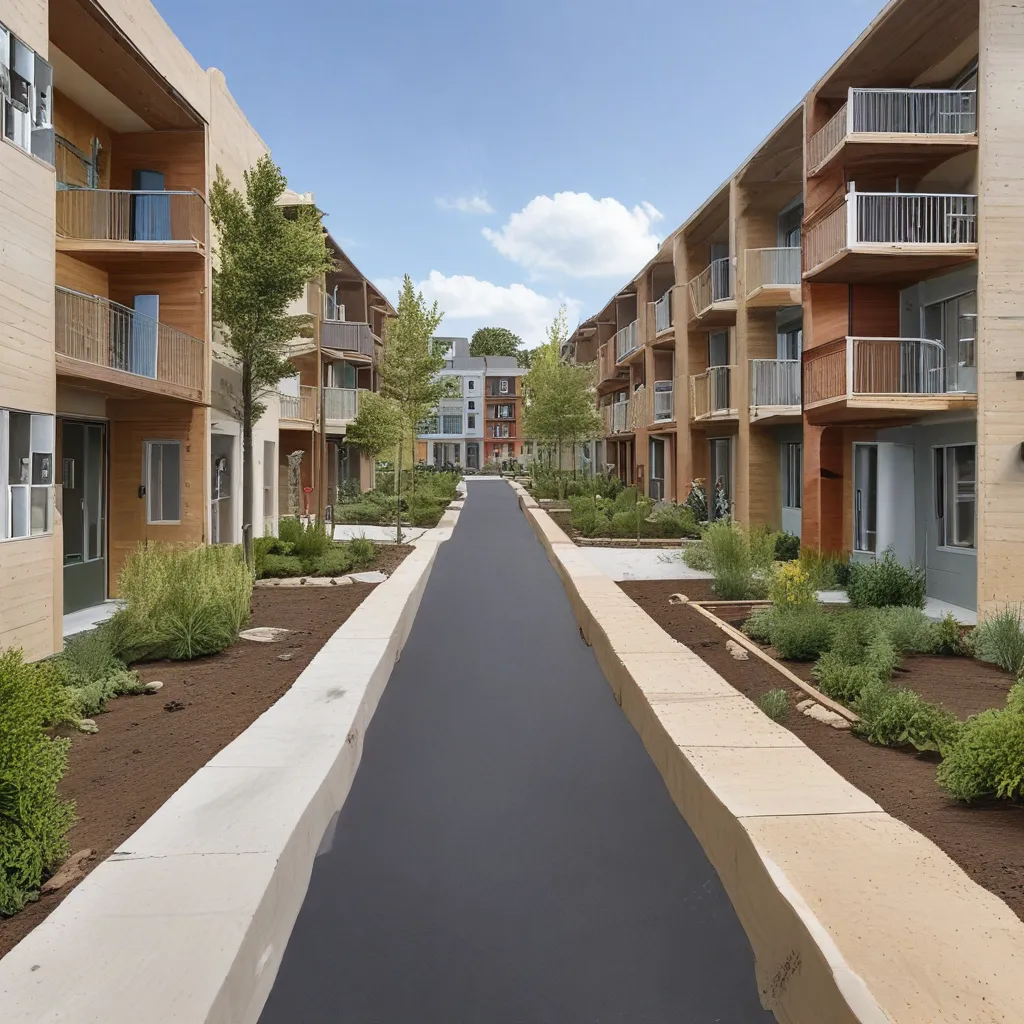
The results speak for themselves. What was once a neglected, crime-ridden public space has been transformed into a vibrant community hub, complete with new playgrounds, walking paths, and green infrastructure. But the true impact goes beyond the physical changes – it’s about the empowerment and pride that residents now feel in their community.
Scaling Community-Driven Solutions
The success of the Skinner Playfield Project has inspired HACC to replicate this model in other underserved neighborhoods across the country. By partnering with local organizations, tapping into the knowledge and expertise of residents, and empowering community members to lead the design process, HACC is creating affordable housing solutions that are truly sustainable and equitable.
“Community-driven design is taking design a step further,” explains Dr. Wilson. “It’s not just about making it accessible to lower-income communities, but about creating a scenario where these communities can be the designers, where they can be leading the entire process.”
At the heart of HACC’s approach is a deep belief in the power of residents to transform their own communities. By breaking down barriers, fostering collaboration, and centering the voices of those who know their neighborhoods best, HACC is paving the way for a more just, resilient, and sustainable future for all.
The Path Forward: A Call to Action
As we grapple with the complex challenges facing our communities, the stories and lessons from HACC and other community-driven initiatives offer a glimmer of hope. By empowering residents to take the lead, we can unlock innovative solutions that address the root causes of inequity and build a more inclusive, sustainable future.
“If you want to go fast, go alone. If you want to go far, go together,” says the African proverb. At HACC, we’re choosing to go far, hand-in-hand with the communities we serve. Join us on this journey as we reimagine the future of affordable housing – one that is designed by and for the people who call it home.