
Greening Neighborhoods: Affordable Housing, Eco-Friendly Solutions
Unlocking the Power of Green Affordable Homes
I still remember the day when I first learned about the concept of “green gentrification.” It was during a casual conversation with a colleague, and the term immediately piqued my interest. Little did I know that this simple encounter would forever change the way I approached my work in affordable housing solutions.
As I delved deeper into the topic, I was confronted with a harsh reality – the very efforts to create more sustainable and environmentally-friendly neighborhoods could inadvertently lead to the displacement of the very communities they were meant to serve. It was a bitter pill to swallow, but it also ignited a fire within me to find a way to reconcile the seemingly conflicting goals of environmental stewardship and social equity.
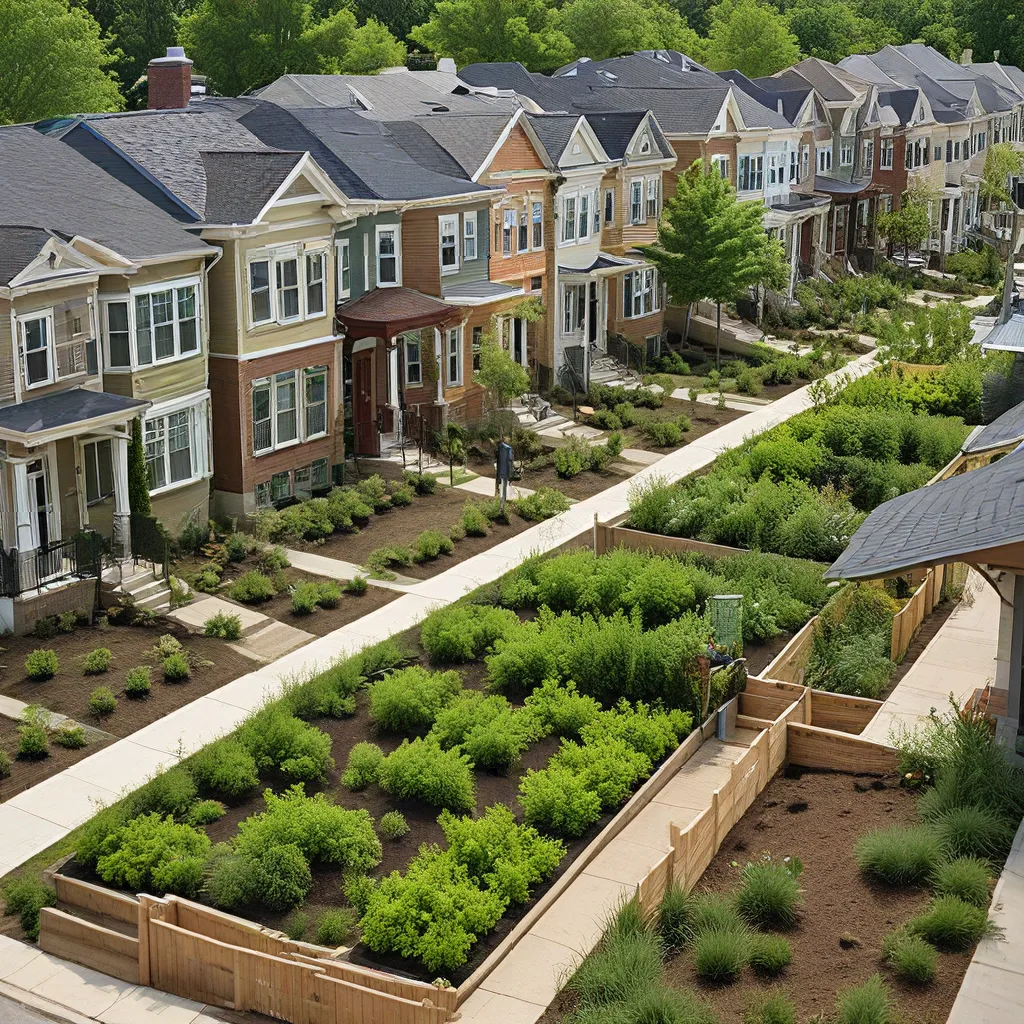
That’s why I’m so passionate about sharing the incredible work being done by the team at HACC Housing, an organization dedicated to creating affordable, eco-friendly homes that empower communities rather than displace them. Their approach is a shining example of how we can “green” our neighborhoods without sacrificing the very people who need it most.
The Paradox of Green Gentrification
The story of green gentrification is a fascinating one, with roots that stretch back to our most basic notions of value and worth. Take, for example, the humble tree. We all know that mature, healthy trees can add significant value to a property – in fact, the U.S. Forest Service estimates that they can increase a home’s value by an average of 10%. And in Portland, Oregon, a study found that homes with street trees sold for an average of $7,130 more than those without.
But therein lies the rub. As we start to prioritize and “green” our neighborhoods, we’re inadvertently creating a situation where the very people who need access to these natural assets the most are priced out of the market. It’s a classic case of the rich getting richer, while the poor are left on the outside looking in.
This phenomenon of “green gentrification” has been observed in cities across the globe, from the High Line in New York City to the Atlanta BeltLine. As these areas undergo environmental revitalization, property values skyrocket, and the long-time residents who have called these neighborhoods home for generations can no longer afford to live there.
Flipping the Script: Affordable, Eco-Friendly Solutions
But the team at HACC Housing is determined to flip the script on this troubling trend. They understand that creating truly sustainable communities means addressing both environmental and social concerns, and they’re doing it in a way that’s both innovative and impactful.
At the heart of their approach is a deep commitment to the principles of green building and design. They’ve embraced the Enterprise Green Communities Criteria, which is the “only national green building program created with and for the affordable housing sector.” This comprehensive framework covers everything from site selection and water efficiency to indoor air quality and resident engagement.
But what sets HACC Housing apart is their unwavering focus on ensuring that these green affordable homes aren’t just good for the planet – they’re also good for the people who live in them. By partnering with the International WELL Building Institute, they’ve created a path for their developments to achieve certification under both the Enterprise Green Communities and WELL Building Standard, ensuring that these homes are not only energy-efficient and environmentally-friendly, but also optimized for human health and well-being.
Tackling Climate Change, One Home at a Time
The numbers speak for themselves. To date, HACC Housing has helped create over 2,300 affordable green-certified homes nationwide, preventing a staggering 26,000 tons of CO2 emissions and saving residents a whopping $131 million in water and energy costs. And they’re not stopping there – their team is constantly pushing the boundaries of what’s possible, collaborating with researchers and government organizations to advance the field of green affordable housing development.
But the real magic happens when you dig a little deeper. These aren’t just numbers on a spreadsheet – these are the stories of real people, whose lives have been transformed by the power of eco-friendly, affordable housing. Take, for example, the high-rise modernization project for seniors in Chattanooga, where residents now enjoy energy-efficient appliances, improved indoor air quality, and a renewed sense of community. Or the accessible new homes in Philadelphia, designed with the needs of the residents in mind, from wheelchair-friendly layouts to ample green spaces.
A Brighter, Greener Future for All
As I reflect on my journey of discovering the concept of green gentrification, I can’t help but feel a sense of hope and optimism. Because in the hands of organizations like HACC Housing, the pursuit of environmental sustainability doesn’t have to come at the expense of social equity. In fact, it can be the very catalyst that brings people together, empowering communities and creating a brighter, greener future for all.
So, if you’re passionate about making a difference, I encourage you to explore the amazing work being done by HACC Housing and other like-minded organizations. Together, we can rewrite the script on affordable housing, proving that it is possible to create eco-friendly homes that don’t just benefit the planet, but also the people who call them home.