


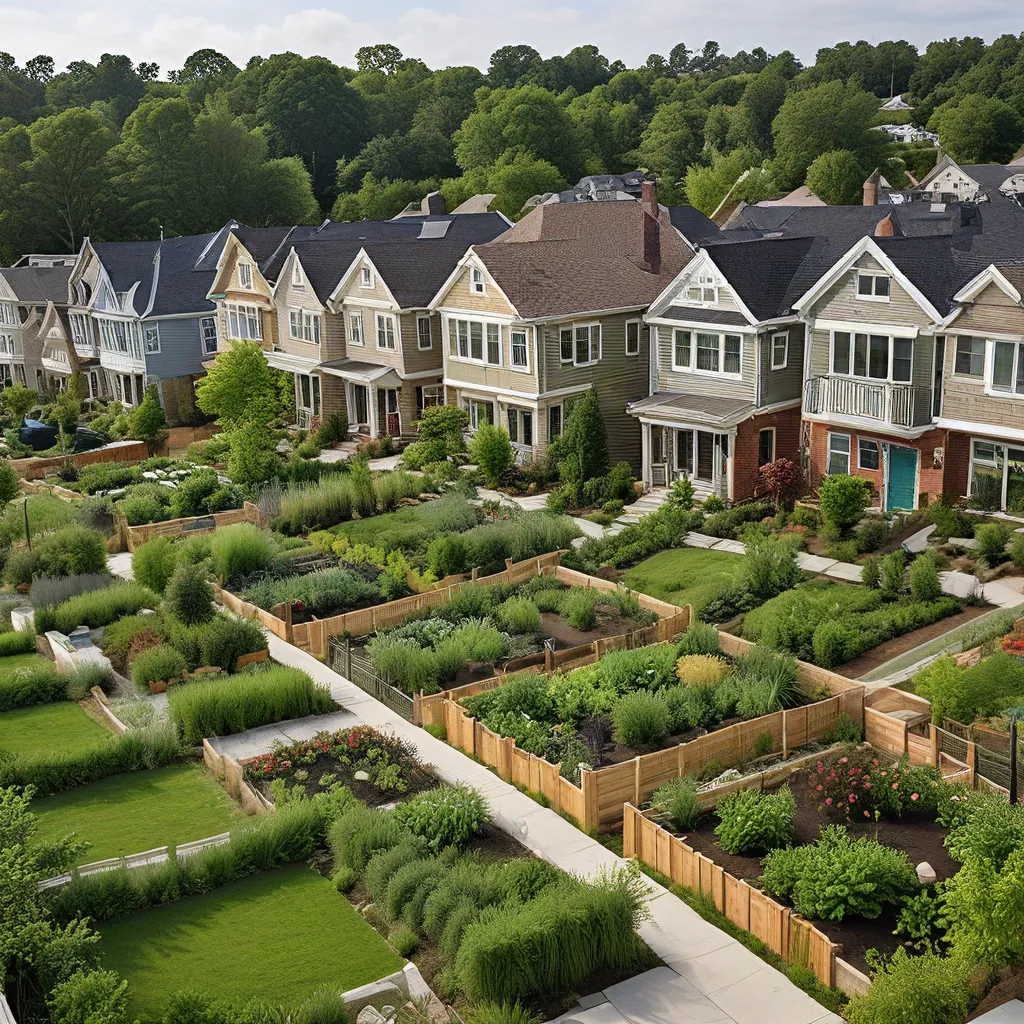
Millennials Lead the Way Toward a Greener Suburban Future
As a proud member of the Baby Boomer generation, I’ve got to say – the Millennials are really surprising me. And I mean that in the best way possible. You see, I always thought of the younger generations as city-dwelling hipsters who wanted nothing to do with the suburbs. But it turns out, I couldn’t have been more wrong.
According to a recent article in the New York Times, Millennials – that massive generation aged 20 to 36 – are actually flocking to the suburbs in droves. And get this, they’re not just moving out to the sprawling, car-dependent suburbs of old. No, this generation is pushing for a whole new vision of suburban living – one that’s greener, more sustainable, and better integrated with the surrounding community.
As a landscape architect and avid student of urban design, I’m thrilled to see this shift. Because let’s be honest, the traditional suburb has always been a bit of an environmental nightmare. All that pavement, those energy-guzzling homes, and the total reliance on cars – it’s a recipe for ecological disaster. But the Millennials, they’re not having it. They want suburbs that are built to be sustainable, with features like green roofs, communal gardens, and access to public transit.
Reinventing the Suburb for a Greener Future
I’ve got to hand it to the Millennials – they’re really thinking outside the box when it comes to suburban living. Take, for example, the concept of the “granny flat.” These are essentially small secondary units, often built in the backyard of a single-family home. Not only do they help alleviate the housing crunch, but they also allow for multi-generational living – something that was the norm back in the day, before the rise of the nuclear family suburb.
And speaking of that nuclear family suburb, the Millennials are questioning the whole model. Why does every house need its own driveway and two-car garage? Why can’t we have more flexible, communal parking areas instead? After all, with the rise of ride-sharing and autonomous vehicles, do we really need all that private car storage space?
By rethinking the suburban blueprint in this way, the Millennials are freeing up valuable land that can then be transformed into parks, gardens, and other green spaces. Imagine a suburb where the ratio of plants to pavement is actually in favor of the plants! That’s the kind of radical change we need to see if we’re going to make these communities truly sustainable.
Harnessing the Power of Green Roofs and Solar
Of course, it’s not just about the layout of the suburbs – it’s also about the materials and technologies we use. And here again, the Millennials are leading the charge. Take green roofs, for example. These living, breathing rooftops don’t just look beautiful, they also provide impressive stormwater management, insulation, and even habitat for local wildlife.
According to one expert, green roofs are a “perfect fit for the suburb of the future.” Not only do they help reduce the urban heat island effect, but they also work in perfect harmony with another key technology: solar panels.
That’s right, the Millennials aren’t just embracing green roofs – they’re also pushing for widespread solar power integration in the suburbs. And why not? With all that flat, unshaded roof space, suburban homes are practically begging to be covered in solar panels. Plus, the energy savings can be a real game-changer for families looking to keep their housing costs down.
Fostering Community and Connectivity
But it’s not just about the physical design of these new, greener suburbs – it’s also about the social fabric. After all, what good is an environmentally-friendly suburb if the residents feel isolated and disconnected from their neighbors?
Fortunately, the Millennials have that covered, too. Take the example of Lunetten, a suburb in the Netherlands that was designed with community in mind. This place has it all – centralized amenities like schools and shops, plenty of green spaces and playgrounds, and even a neighborhood bar where residents can gather and socialize.
And the best part? Lunetten is designed to be highly interconnected, both within the suburb and with the surrounding areas. Sure, there are limits on through-traffic to keep things quiet and peaceful, but residents have easy access to public transit, bike paths, and even nearby suburbs and the city center. It’s the perfect balance of privacy and connectivity.
Lessons from the Old Country
As an American, I have to admit that I’m a little envious of places like Lunetten. We’ve got a lot to learn from our friends across the pond when it comes to building sustainable, livable suburbs. But the good news is, the Millennials are taking notes and putting those lessons into practice.
In fact, one of the key insights from Lunetten is the importance of planning a suburb as a cohesive whole, rather than just a collection of individual homes. By taking a holistic, integrated approach, the designers of Lunetten were able to create a true community – one with a strong sense of identity and plenty of amenities right within the neighborhood.
And let’s not forget the role of density, either. Lunetten may not be as sprawling as a typical American suburb, but that higher density actually works in its favor. With more people living in a smaller footprint, there’s less need for car-dependent infrastructure, and more opportunity to incorporate green spaces and shared community resources.
A Greener, More Connected Future
So, where does all of this leave us? Well, if the Millennials have their way, the suburbs of the future are going to look a lot different than the ones we grew up with. Gone will be the sea of pavement and energy-guzzling McMansions, replaced by greener, more livable communities that prioritize sustainability, connectivity, and a strong sense of community.
And you know what? I’m totally on board. As a proud member of the HACC Housing community, I’ve seen firsthand the power of thoughtful, sustainable design to transform lives and strengthen neighborhoods. So if the Millennials can help lead the charge toward a greener, more connected suburban future, then I say let’s get out of their way and let them work their magic.
After all, the planet – and our communities – will be better off for it.