
As someone passionate about urban revitalization and sustainable living, I’m thrilled to share my insights on how we can breathe new life into our cities while providing affordable, eco-friendly housing solutions. Join me on this journey as we explore the power of sustainable infill development – a transformative approach that’s reshaping the way we think about urban spaces.
Reclaiming the Urban Landscape
Imagine a city where vacant lots and abandoned buildings are transformed into vibrant, livable communities. This is the promise of sustainable infill development, a strategic approach that breathes new life into underutilized urban areas. By targeting these so-called “brownfield” sites – properties where the expansion, redevelopment, or reuse may be complicated by the presence of hazardous substances or contaminants – we can not only clean up environmental hazards but also create affordable housing that promotes sustainable, community-centric living.
Brownfield redevelopment is a crucial part of this equation. These neglected sites, often found in the heart of our cities, present unique opportunities to revitalize urban spaces while reducing development pressure on green spaces and working lands. As the Environmental Protection Agency (EPA) notes, “Cleaning up and redeveloping these properties can remove contaminants that harm air and water quality, reduce blight, and take development pressure off green spaces and working lands.” This is a win-win for both the environment and the community.
Affordable, Eco-Friendly Living
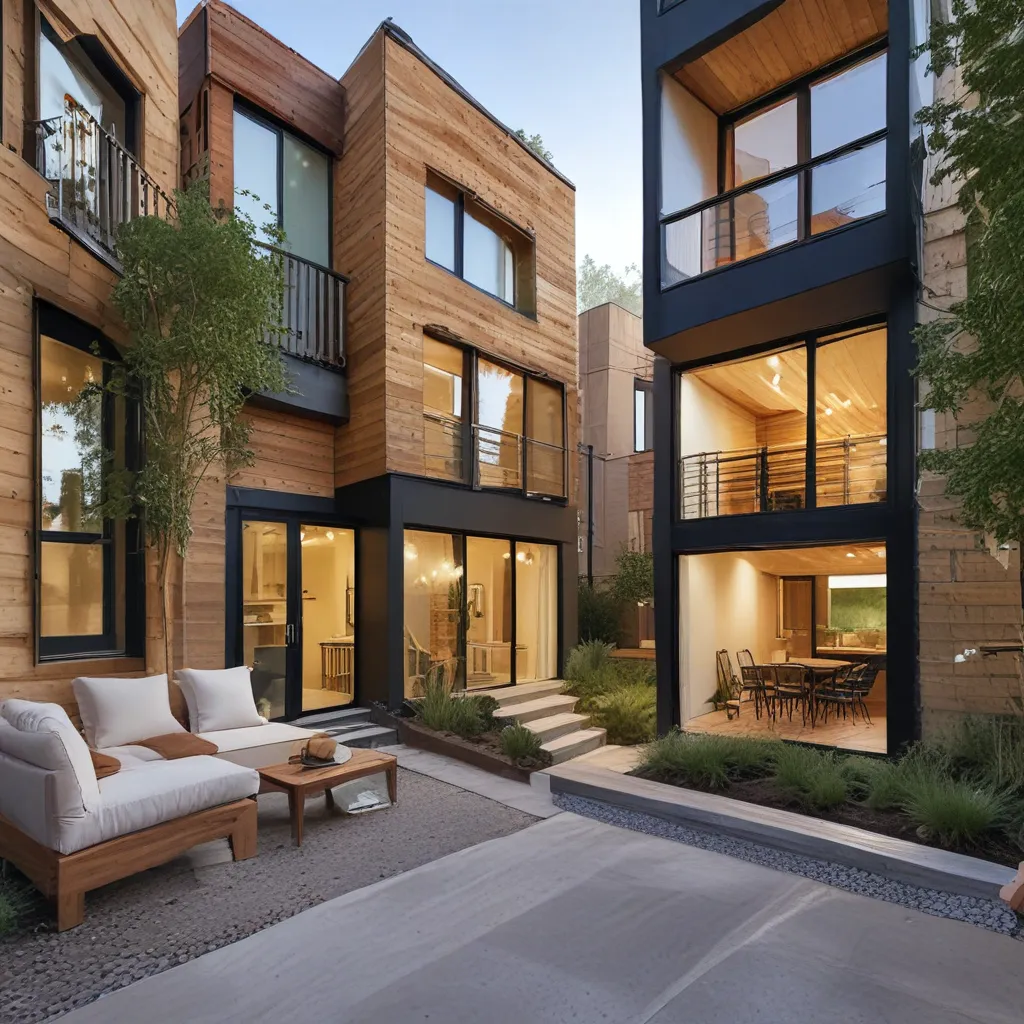
At the core of sustainable infill development are the affordable, eco-friendly homes that breathe new life into these reclaimed urban spaces. Imagine a neighborhood where energy-efficient, sustainably-built dwellings stand in place of abandoned warehouses or vacant lots. These “eco-homes” not only provide much-needed affordable housing, but they also reduce our environmental impact through features like solar panels, water-saving appliances, and smart-home technology.
Infill development allows us to make the most of our existing infrastructure, leveraging existing roads, utilities, and community resources to create vibrant, walkable neighborhoods. By focusing on underutilized urban areas, we can reduce the need for new construction on undeveloped land, preserving precious green spaces and natural habitats.
But the benefits of sustainable infill go beyond just the environmental. These affordable eco-homes also foster a greater sense of community, with shared green spaces, community gardens, and opportunities for social interaction. Residents of these revitalized urban neighborhoods can enjoy the convenience of city living while living in harmony with nature.
Overcoming Challenges, Embracing Opportunities
Of course, sustainable infill development is not without its challenges. Contaminated brownfield sites can be complex to clean up and redevelop, requiring specialized expertise and significant funding. Additionally, securing affordable housing in desirable urban areas can be a daunting task, as competition for limited land and resources can drive up costs.
However, with the right approach and the support of organizations like HACC Housing, these obstacles can be overcome. Government programs, such as the EPA’s Brownfields Program and Land Revitalization Program, provide grants and technical assistance to help communities tackle these complex projects. By working collaboratively with local stakeholders, we can develop sustainable, equitable solutions that revitalize urban spaces and create affordable, eco-friendly housing opportunities.
Inspiring Real-World Examples
The power of sustainable infill development is already being realized in communities across the country. Take, for example, the Historic Fourth Ward Park and the Atlanta BeltLine project. This ambitious initiative has helped to spark over $775 million in private development, including the mixed-use redevelopment of the long-abandoned Sears Warehouse Building. By transforming a once-neglected industrial site into a thriving, mixed-use hub, this project has breathed new life into the surrounding community, creating affordable housing, green spaces, and improved transportation options.
Another shining example is the Grandview Heights Apartments in Los Angeles, a sustainable infill development that transformed a former industrial site into a vibrant, mixed-income community. Featuring energy-efficient, affordable housing units, community gardens, and a range of amenities, this project has become a model for sustainable urban revitalization.
The Future of Sustainable Infill
As we look to the future, the potential for sustainable infill development to reshape our cities is truly exciting. By embracing this holistic approach to urban renewal, we can not only provide much-needed affordable housing but also create more livable, environmentally-conscious communities. Imagine neighborhoods where families can thrive in energy-efficient homes, surrounded by green spaces, community gardens, and a rich tapestry of local businesses and cultural offerings.
This vision of the future is not just a pipe dream. With the support of organizations like HACC Housing, and the continued implementation of innovative programs and policies, sustainable infill development can become a reality in cities across the globe. By reclaiming and revitalizing our urban spaces, we can create a more sustainable, equitable, and vibrant future for all.
So, let’s roll up our sleeves and get to work! Together, we can transform our cities, one affordable, eco-friendly home at a time, and usher in a new era of sustainable, community-centric living. The future is ours to shape, and with sustainable infill development as our guide, the possibilities are endless.